In short
Choose a company that can show you its insurance, gives you a risk assessment and method statement for your site, cleans from the ground with purified water wherever it can, and sends trained, DBS-checked staff on a schedule it confirms in advance. Then compare what each quote includes, not just the price.
Hiring a window cleaner for a business isn’t the same as hiring one for a house. Your windows are part of how customers and visitors judge you, the work often happens at height and near the public, and as the person who hires the contractor, you have responsibilities too. This checklist covers what to look for and what to ask before you sign anyone up.
Why it’s worth getting right
- First impressions. Visitors see the outside of your building before they meet anyone. Dirty glass and grimy frames suggest a business that doesn’t pay attention to detail.
- Daylight. Clean glass lets in more natural light, which makes offices and workspaces better places to work.
- Looking after the building. Frames and seals that are cleaned regularly last longer and look better.
- Safety and liability. Under the Work at Height Regulations, anyone who controls work at height, including a facilities manager hiring a contractor, has a duty to make sure it’s properly planned and done safely. Choosing a competent contractor is part of that.
The checklist
1. Insurance you can see
Every commercial window cleaner should have public liability insurance, and a company with employees must have employers’ liability insurance by law. Ask for copies, check they’re in date, and check the cover suits the heights and methods they’ll use, including cherry pickers if they’ll need one. Ours is £2 million public liability per operator, and our insurance documents come with every quote.
2. A risk assessment and method statement for your site
A risk assessment and method statement (RAMS) sets out how the work will be done safely on your site: access, equipment, hazards, and how staff and the public will be kept clear. If there’s ever an accident, it’s one of the first things an investigator will ask for. A professional company provides RAMS as a matter of course. Ours are always free once you’ve accepted our quote.
3. The right method for the height
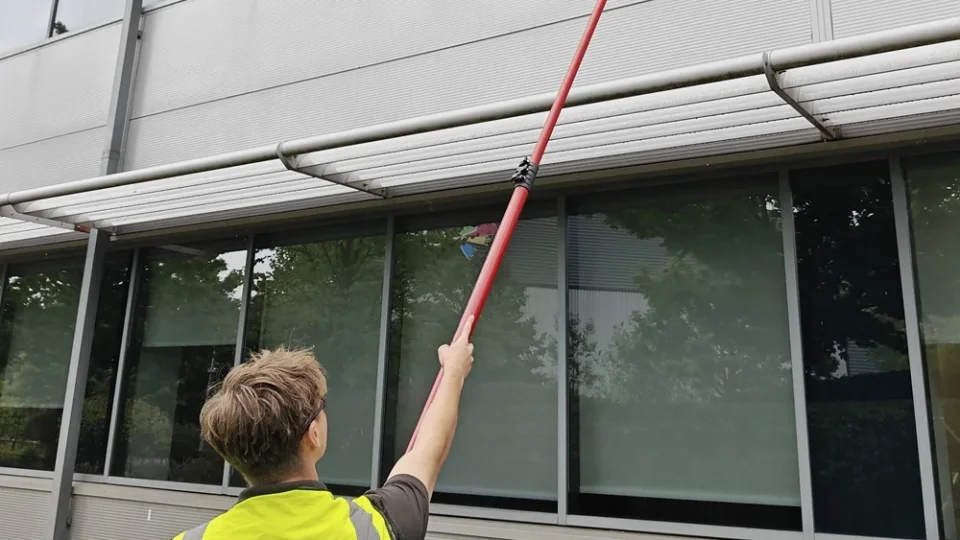
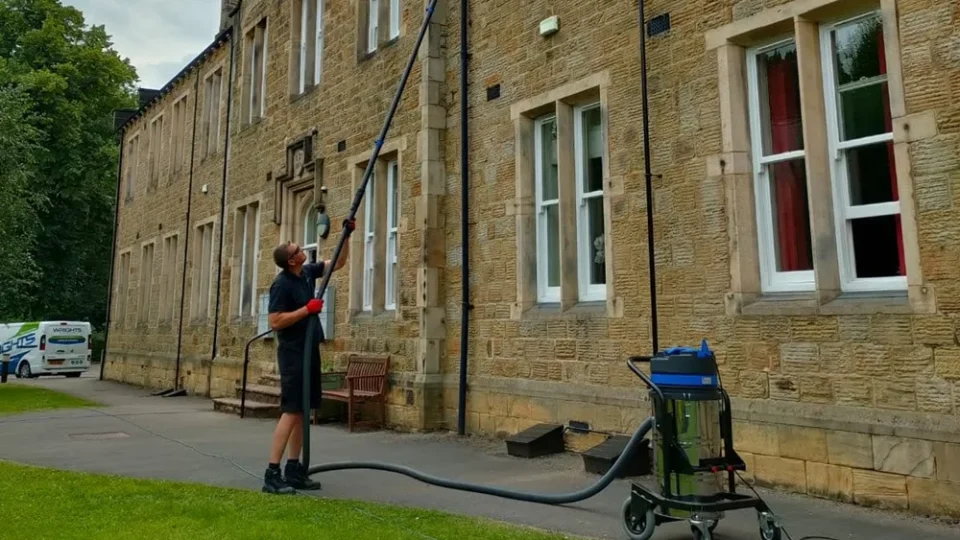
Ask how they’ll clean your windows. For most commercial buildings, the answer should be water-fed poles used from the ground. Above the reach of a pole, look for cherry pickers (MEWPs) run by IPAF-trained operators, or specialist rope access. Be wary of anyone planning to use ladders on the upper floors. Are ladders banned for window cleaners?
4. Pure water, and proof of it
Water-fed poles only work with purified water. Tap water leaves spots and, over time, limescale on the glass. Professional cleaners check their water with a TDS (total dissolved solids) meter: purified water should read at or close to zero, while tap water usually reads in the hundreds. Ask what their reading is.
5. Trained, vetted people
The people cleaning your windows will be on your site, often near your staff, customers, pupils or residents. Ask whether they’re DBS-checked (essential for schools and care homes), whether they wear a uniform and carry ID, and whether they’ll follow your site induction and signing-in rules.
6. What’s included in the price
Two quotes can look very different because they cover different things. Check:
- Are the frames, sills and doors cleaned, or just the glass?
- Is the inside glass included, or only the outside?
- Are hard marks, such as paint, stickers or adhesive, charged extra?
- Is VAT included in the price?
- Are there extra charges for access equipment, parking or out-of-hours work?
7. Reliability and scheduling
A window cleaning contract is only as good as the visits. Ask how visits are scheduled, whether the date is confirmed in advance, what happens if the weather stops a clean, and what they do if you’re not happy with part of the job. We schedule every visit in advance and confirm the date with you, and if something’s been missed, we come back quickly and put it right.
8. A track record
Ask how long they’ve been trading, which businesses like yours they already clean for, and whether you can speak to one of them. Online reviews help, but a reference from a similar building tells you more.
Red flags
- No insurance documents, or a reluctance to send them.
- No RAMS, or a generic one that doesn’t mention your building.
- Ladders planned for the upper floors of a commercial building.
- Tap water and a bucket for glass a pole could reach.
- A price far below everyone else’s, which usually means something has been left out.
- No written quote, no invoices, or cash only.
- Working at height in strong winds, or carrying on when you’ve asked them to stop.
Questions to ask before you sign
- How will you clean our windows, and what equipment will you use?
- Can we have copies of your insurance, and RAMS for our site?
- Are your staff DBS-checked and in uniform?
- Are the frames and sills included, and is VAT included in the price?
- How do you schedule and confirm visits?
- What happens if we’re not happy with a clean?
How we measure up
We’re a family-run company based in Rotherham, cleaning commercial windows since 1995. Here’s where we stand on the checklist:
- Fully insured, with £2 million public liability per operator
- RAMS always free, once you’ve accepted our quote
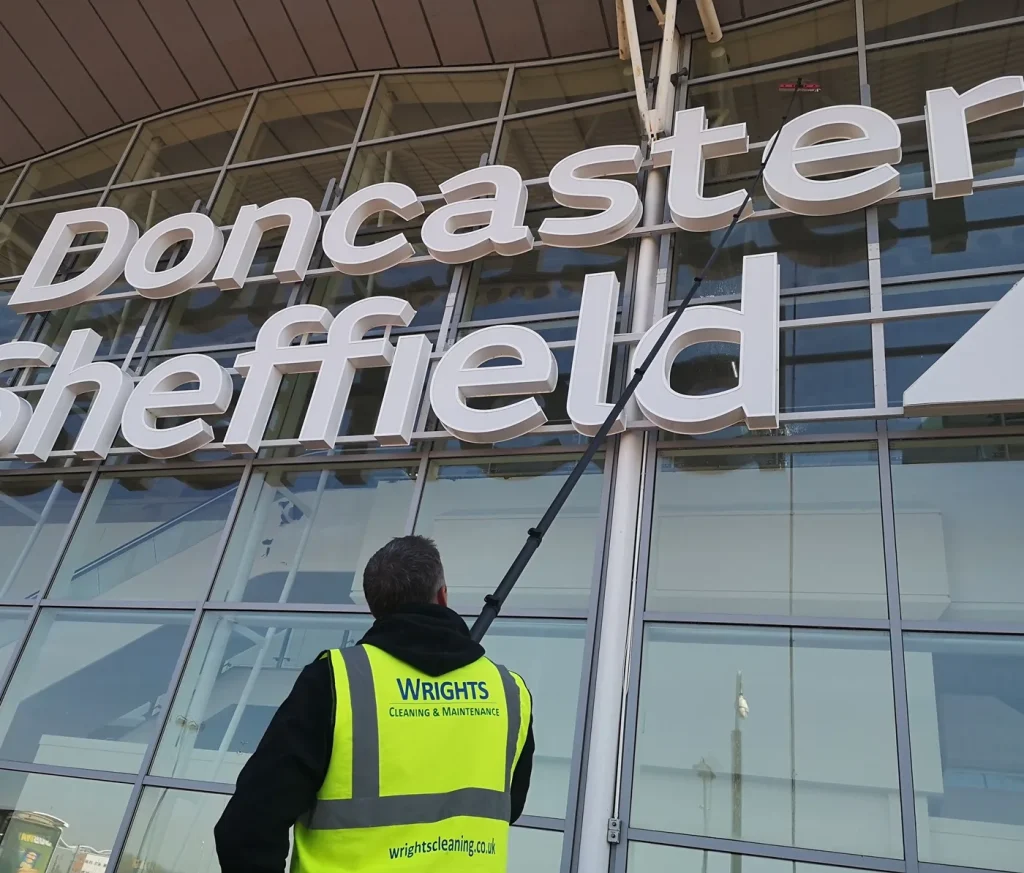
- Water-fed poles to 70ft from the ground, with cherry pickers and rope access above that
- IPAF certified
- DBS-checked, uniformed teams
- Glass, frames and sills cleaned on every visit
- Visits scheduled in advance and confirmed with you
More about us, or read our FAQs.
Questions
What insurance should a commercial window cleaner have?
Public liability insurance as a minimum, and employers’ liability if they have staff, which the law requires. If they use cherry pickers, check the cover includes that work.
Should a window cleaner give me a risk assessment?
Yes. A professional company should provide a risk assessment and method statement (RAMS) for your site. Ours are free once you’ve accepted our quote.
What does TDS mean in window cleaning?
Total dissolved solids: a measure of what’s in the water. Purified water for window cleaning should read at or near zero, which is why it dries without leaving spots.